
Why Negotiation Skills Matter in the Market
Let’s be honest: most of us hate negotiating. In fact, 40% of people actively avoid negotiation because it feels intimidating or confrontational. That’s a huge loss for a few minutes of discomfort.
Whether you’re asking for a raise, closing a deal with a client, or setting boundaries with a vendor, negotiation skills are what separate a good outcome from a great one. But here’s the good news: negotiating isn’t about being pushy or aggressive. It’s a soft skill built on empathy, clear communication, and smart preparation.
In this guide, you’ll learn exactly how to improve your negotiation skills with step‑by‑step techniques, real‑world examples, and the key terms every professional needs to know.
Top 16 Negotiation Skills You Need to Practice
At its heart, negotiation is a discussion between two or more parties trying to reach an agreement through compromise. It’s not about “winning” – it’s about finding a solution that works for everyone while protecting your own interests.
The skills for negotiation go beyond just talking. They include:
1 Preparation
The most underrated skill. Before you speak, research market rates, know your BATNA, and define your goals. Smallppt can help you build a visual deck of your key data in minutes.
2 Active Listening
Don’t just wait for your turn to talk. Listen for what the other side values – and what they fear. Repeat back what you hear: “So if I understand correctly, your main concern is delivery timing?”
3 Emotional Intelligence (EQ)
Stay calm when the temperature rises. Read facial expressions and tone. In US business culture, people respect those who don’t lose their cool.
4 Clear Communication
No jargon. No ambiguity. Say exactly what you want, using numbers and dates. “I’m looking for $88,000 base salary” is better than “I’d like a bit more money.”
5 Problem‑Solving
Think of negotiation as a puzzle. What creative option meets both sides’ needs? Sometimes it’s not price – it’s scope, timeline, or added services.
6 Persuasion
Persuasion isn’t manipulation. It’s showing the other person why your proposal helps them too. Use data, stories, and mutual gain.
7 Patience
Silence is powerful. After you make an offer, wait. The first person to speak often concedes. In salary talks, patience alone can add thousands.
8 Adaptability
Plans change. The other side might throw a curveball. Adaptable negotiators pivot without getting flustered. They ask, “What if we looked at this differently?”
9 Assertiveness
Being nice doesn’t mean being weak. State your needs clearly and without apology. “I’ve earned this raise based on these three results” is assertive, not aggressive.
10 Rapport‑Building
People say yes to people they like. Spend the first few minutes on small talk – weekend plans, shared interests, a compliment about their office. It lowers defenses.
11 Summarizing
Throughout the conversation, pause and recap: “So far we’ve agreed on X and Y. The open point is Z.” This prevents misunderstandings and shows you’re organized.
12 Strategic Questioning
Ask open‑ended questions to uncover hidden needs. “What else would need to be true for this deal to work for you?” or “What’s your biggest hesitation right now?”
13 Framing
How you present an offer changes everything. Instead of “I need a 10% raise,” frame it as “To continue delivering the results you’ve seen – like the 30% sales increase last quarter – a 10% adjustment keeps me aligned with market value.”
14 Using Silence
After you propose, stop talking. Silence feels uncomfortable, so the other side often fills it – sometimes with a concession. Try it. It works.
15 Closing Techniques
Know how to ask for the deal. Use assumptive closes: “If we agree on price, shall I send over the paperwork today?” Or summary closes: “It sounds like we’re aligned on everything except delivery date. Can we settle on the 15th?”
16 Self‑Reflection (Post‑Negotiation)
After every negotiation, ask yourself: What worked? What would I change? Did I leave value on the table? This is how you continuously improve your negotiating skills.
And yes, these skills work just as well in a corporate boardroom as they do when you’re haggling over a used car or negotiating a later work‑from‑home start time.
How to Improve Your Negotiation Skills (Step‑by‑Step)
Improving your negotiating skills isn’t magic – it’s a process. Follow these three steps to level up before your next big conversation.
This is the most important step. Yet most people skip it and “wing it.” Big mistake.
Before you enter any negotiation, you need:
- Market data (salary ranges, competitor pricing)
- A clear list of your goals (must‑haves vs. nice‑to‑haves)
- Talking points and evidence to back up your ask
Here’s where Smallppt changes the game. Instead of spending hours building slides from scratch, you can use Smallppt to instantly generate a professional, data‑driven presentation that outlines your value or proposal.
Example: Asking for a raise? Smallppt turns your bullet points – “increased sales 30%,” “took on two new clients” – into a polished, persuasive deck. You walk in looking prepared, credible, and confident. No design skills required.
Stop worrying about formatting. Focus on your strategy. Smallppt does the heavy lifting so you can own the room.
Being open to negotiation doesn’t mean being a pushover. It means you’re flexible on how you get what you want – not on whether you get it at all.
Top negotiators enter every conversation assuming there’s a deal to be made. They ask questions like:
- “What else could make this work for you?”
- “If price is the sticking point, could we adjust the timeline or scope?”
This mindset turns conflict into collaboration. And the business culture rewards people who solve problems, not people who dig in their heels.
Step 3: Practice, Role‑Play, and Get Feedback
You wouldn’t run a marathon without training. Don’t negotiate without practice.
- Run a mock negotiation with a trusted coworker or friend
- Record yourself (yes, it’s awkward – and effective)
- After real negotiations, ask: “What worked? What would I change?”
Over time, you’ll notice patterns – the phrases that land, the moments you flinch, the questions that unlock better deals.
Common Negotiation Scenarios & Examples
Let’s make this real. Here are three common situations where negotiation skills win the day.
Example A: Salary Negotiation
Situation: You get a job offer for $80,000. You want $88,000.
Bad approach: “I need more money.”
Good approach: “Based on market data for this role in our city, the typical range is $85,000‑$92,000. Given my experience with [specific achievements], I’m targeting $88,000. Can we get there?”
Remember the stat: people who negotiate salary see an average increase of nearly 19% – often in a single conversation.
Example B: Vendor Contract (Small Business)
Situation: A software vendor quotes $12,000/year.
Good approach: “That’s above our budget. Could we get a discount for a two‑year commitment? Or could you include training and setup at no extra cost?”
Notice the negotiation technique here: don’t just say “no.” Offer alternatives.
Example C: Remote or Hybrid Work Arrangement
Situation: Your company wants everyone back 5 days a week. You want 2 days in‑office.
Good approach: “I understand the need for collaboration. Could we try a pilot where I come in Tuesdays and Thursdays, and we review productivity after 90 days? I’ve also created a remote‑work protocol using [Smallppt’s process maps] to ensure transparency.”
This shows flexibility, data‑backed thinking, and a willingness to test – all highly valued in workplaces.
Key Negotiation Terms to Know (The Glossary)
You don’t need an MBA, but learning a few negotiation terms will make you sound like a pro.
| Term | Meaning | Why It Matters |
|---|---|---|
| BATNA | Best Alternative to a Negotiated Agreement | Your “walk‑away” power. If you have a strong BATNA, you never have to accept a bad deal. |
| ZOPA | Zone of Possible Agreement | The sweet spot where both sides’ acceptable ranges overlap. Find it, close the deal. |
| Anchoring | The first offer made in a negotiation | It sets the psychological range. Aim high (but realistic) to anchor in your favor. |
| Concession | A give‑and‑take trade | Never concede for free. Ask for something in return. |
Knowing these negotiation terms helps you recognize when someone is using tactics on you – and when to use them yourself.
5 Common Negotiation Mistakes to Avoid
Even experienced negotiators slip up. Avoid these traps.
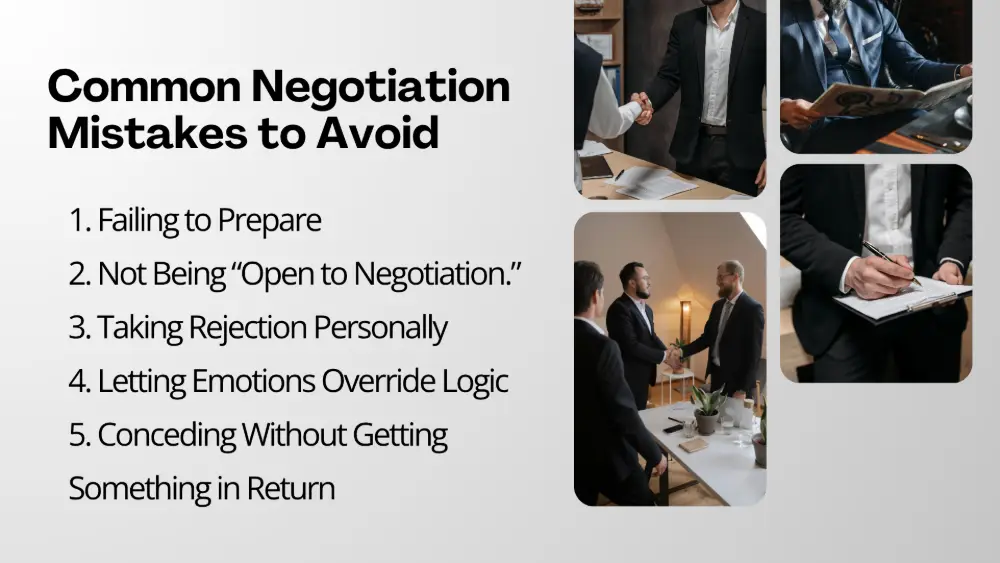
1. Failing to Prepare
Walking in without data is like showing up to court without evidence. Use Smallppt to build a quick, visual summary of your key points – you’ll look sharp and feel confident.
2. Not Being “Open to Negotiation.”
If you present your offer as “take it or leave it” too early, the other side may walk. Stay curious. Ask, “What would make this work for you?”
3. Taking Rejection Personally
“No” is rarely about you. It’s about timing, budget, or constraints you don’t see. Shrug it off and ask, “What if we changed X?”
4. Letting Emotions Override Logic
Anger, frustration, or desperation leads to bad deals. If you feel heated, say, “Let me think about that and circle back tomorrow.”
5. Conceding Without Getting Something in Return
Every “yes” you give should come with a small “yes” from them. It’s called reciprocity, and it works.
Conclusion: Master the Art of Influence
Negotiation skills aren’t just for lawyers and salespeople. They’re for anyone who wants better pay, stronger business relationships, and less stress when stakes are high.
The best news? You can start improving today. Listen more. Prepare harder. Stay open to creative solutions. And when you need to make your case visually, let Smallppt handle the design.
Ready to walk into your next meeting with total confidence?
Use Smallppt to build your pitch deck in minutes – so you can focus on winning the conversation, not fighting with slide layouts.